
Rose Merchant
15 Jul 2026
Turning Commitment into Action for Young People in Rail
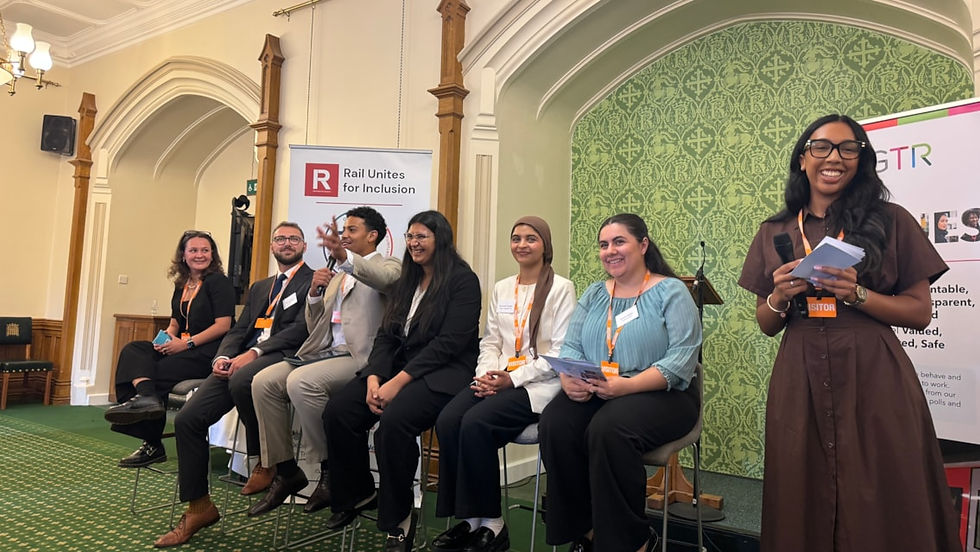
On World Youth Skills Day, leaders, young people and partners from across the rail industry gathered at the Palace of Westminster to launch the Rail Youth Promise (RYP), a sector-wide commitment to creating better opportunities for young people, particularly those facing barriers to employment.
A recurring theme throughout the event was clear: we make better decisions when we listen to voices we do not usually hear, and we create better workplaces when they are designed with the people who will work in them.
A Promise Built on Five Pillars
The Rail Youth Promise is structured around five pillars: Inspire, Hire, Learn, Grow and Connect. Together, they focus on improving awareness of rail careers, creating fairer routes into employment, supporting early careers, enabling progression and reducing barriers such as lack of networks and the cost of travel.
Putting Young Voices at the Centre
Young people were not just attendees but contributors to the discussion.
Megan, a 16-year-old neurodiverse student with autism and ADHD, spoke about the importance of workplaces that genuinely understand individual needs. She highlighted the impact of neurodiversity awareness training, quiet wellbeing spaces and inclusive cultures that reduce the need for employees to constantly advocate for themselves.
Her message was simple: understanding people as individuals creates environments where everyone can thrive.
Why Rail Needs Young Talent
Speakers reflected on rail's role as both a vital national service and a major employer. With significant workforce change expected over the coming decade, investing in young people is not only the right thing to do but essential to securing the future skills the industry needs.
Baroness Smith, welcomed guests and highlighted the wider national challenge of more than one million young people who are neither learning nor earning. She stressed that tackling this issue requires partnership between government, employers and young people themselves.
What Young People Are Telling Us
A panel discussion brought the five pillars to life through research and lived experience.
Supporting Apprentices to Thrive
Romario Ellis, Founder of Outer Circle, shared findings from a survey of more than 1,000 apprentices:
67% had considered leaving their apprenticeship.
Nearly 60% reported low confidence in their early weeks.
69% pretended to feel confident while feeling lost.
91% said community and connection improved their experience.
87% wanted more leadership and personal development support.
His challenge to employers was clear: attracting young people is only half the task. Creating an environment where they want to stay matters just as much.
Inspiring Future Talent
Natasha Dudley, Graduate Mechanical Engineer at Network Rail, highlighted the value of outreach, mentoring and work experience. She encouraged industry professionals to share their career journeys and help young people understand that rail offers opportunities far beyond traditional perceptions of the sector.
Making Recruitment More Inclusive
Shireen Kalra of the Youth Futures Foundation outlined evidence supporting the "Hire" pillar. Young people represent just 6.8% of the rail workforce, while around 75,000 rail employees are expected to retire by 2030.
She urged employers to:
Expand entry-level opportunities and apprenticeships.
Remove unnecessary qualification requirements.
Use structured interviews.
Recruit for potential as well as experience.
Improve communication and feedback throughout recruitment.
Learning Through Real Experience
Razeenah Chopdat shared her experience on the PlanBEE Rail Apprenticeship Programme, which includes placements across multiple organisations. She highlighted the value of combining classroom learning with real work, exposure to different parts of the industry and strong mentoring support.
Creating Opportunities to Grow
Richard Harmer, Chief Executive of Young Rail Professionals, shared survey findings showing that career progression, networking and work experience remain key priorities for young professionals. Significantly, 96% said young people should be involved in decisions affecting early career development.
Removing Barriers to Access
Madison Moon, Youth Engagement and Insight Lead at GWR and Oxfordshire Community Rail Partnership, spoke about the importance of affordability and accessibility.
Research involving 913 young people found that 44% viewed cost as the biggest factor influencing rail travel. One example highlighted how attending seven interviews across different cities could cost a young person more than £700 in rail fares alone.
The discussion also covered safety, integrated transport and accessible travel information, all of which influence young people's ability to access opportunities.
From Promise to Action
Closing remarks focused on turning commitment into measurable change. Priorities included:
Expanding work experience and school engagement.
Simplifying routes into rail careers.
Improving recruitment experiences.
Supporting new apprenticeship pathways.
Providing clear progression opportunities.
Involving young people in shaping solutions.
Reducing barriers such as travel costs.
A Shared Ambition for an Inclusive Railway
The Rail Youth Promise provides a practical framework for action, but its success will be defined by what organisations do next.
For Rail Unites For Inclusion, the message was clear: inclusive workplaces are built intentionally and are strongest when shaped by lived experience. By investing in young people, listening to their voices and removing barriers to opportunity, the railway can become more inclusive, more sustainable and better equipped for the future.